Research Philosophy
Positivism:Believe in a single reality or truth. Good positivism will have a theory or hypothesis that can be tested by numbers.
Interpretivism: It is not interested in numbers or averages, but is more interested in the possible nuances in multiple realities that may exist. Be more interested in viewpoints and experiences, and admit one’s subjectivity as a researcher.
Research Approach
Inductive:When consulting the literature, it was realized that the research question and the theoretical materials behind it were not abundant.By using induction, the collected data will create theories for you. Using these data, group the research elements – the data will create theories.
Deductive: Use data to test theories, not to create them.
Qulitative:focus on text、image or video-based data sources.
Quantitative: focus on numerical/quantitative data
lack of existing literature——Inductive
focused on human experience——Qulitative
Research Strategy
experimental research:control group/test group,focus oncompare
descriptive research:a larger population of interest
action research:benefit the respondents in the sample
Grounded theory:building a theory based largely on the collected data.
first – interview. Recall the patterns in the interview and design theories based on these patterns
second – Whether it is applicable to another group
case study research
Time Horizon
Cross-sectional:Focus on a certain period of time
Longitudinal: How do things change over time at different points in time
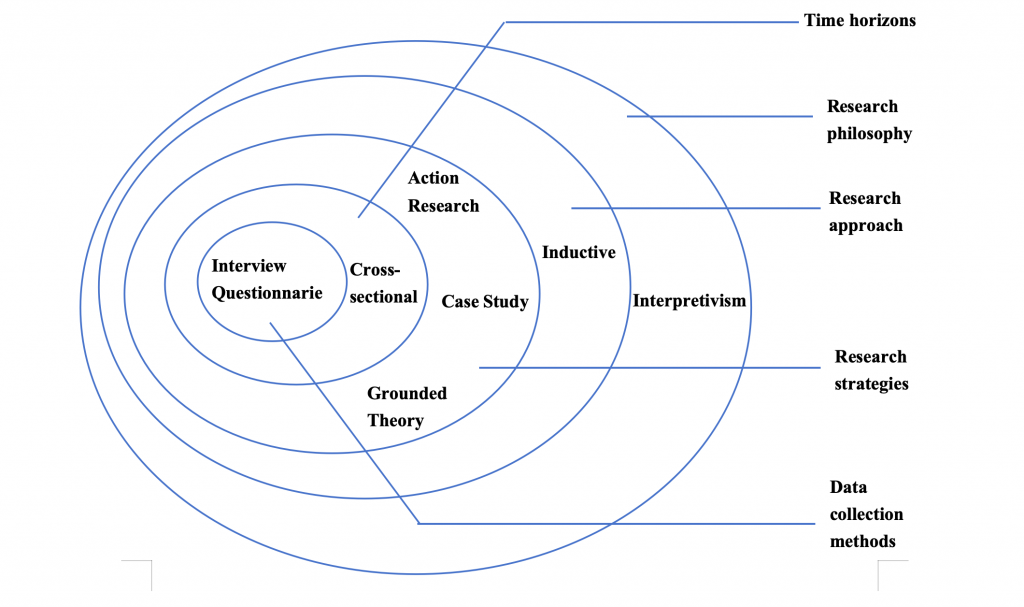
| Layer | Research Design |
| Research Philosophy | Interpretivism——My research aims to understand why individuals choose to delay going to bed even when they know that staying up late is harmful. This is a subjective and emotion-driven behavior. What I focus on are the emotions, motivations, life rhythms and psychological states behind the behaviors, with the goal of understanding why young people actively choose to stay up late. |
| Research Approach | Inductive——I have summarized the problems from my own and the target group’s experiences of staying up late, and learned about the phenomenon of Revenge Bedtime Procrastination from real life, rather than verifying hypotheses based on theories. Through data such as observation, questionnaires and interviews, I constructed an understanding of the mechanism of ” Revenge Bedtime Procrastination” and generated my own intervention model. |
| Research Strategy | Action Research: Test feedback through intervention Case Study: Focusing on specific groups (college students and young workers), it deeply understands the background and impact of their staying up late behavior. Grounded Theory: Continuously analyze behaviors and emotions in data collection to form a theoretical framework.——The feeling of being occupied during the day → procrastination at night → sleep deprivation → fatigue the next day → forms an anxiety cycle. |
| Time Horizon | Cross-sectional |
| Methodological Choice | Mono Method – Qualitative focus using interviews and observations. |
| Data Collection Methods | Interviews:who had Revenge Bedtime Procrastination behaviors, with the aim of understanding the reasons behind the phenomenon and what the revenge is. Questionnaire:The intention is to understand the respondents’ cognition, impact and attitude towards Revenge Bedtime Procrastination. |
Research Question
How can behaviour created by a loss of autonomy over work-life balance be mitigated, help Chinese young people not seek late-night activities, as compensation for loss of agency in their daytime schedules?
How can behaviour created by a loss of autonomy over work-life balance be mitigated——research objective,what needs to be changed
help Chinese young people——who is affected
not seek late-night activities——Phenomenon
as compensation for loss of agency in their daytime schedules——why it happens,Indicate the underlying behavioral logic
Leave a Reply